Bringing 80s Arcade Energy Into Modern Creative Projects
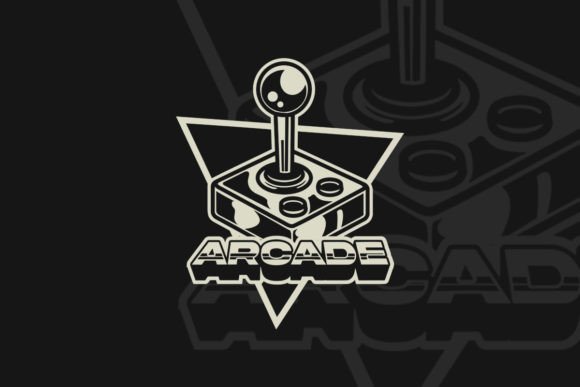
There’s a particular rush that hits when you see a neon-glowing font, angular geometric shapes, and that unmistakable pixel-art sheen. It’s not just nostalgia; it’s a visual language that screams fun, high scores, and late nights at a cabinet with sticky buttons. An Arcade Vintage Gaming Logo isn’t simply a graphic. It’s a time machine in your design toolkit, ready to splash authentic retro vibes onto anything from a coffee mug to a YouTube channel banner. When you download a package containing 1 PNG file, 1 vector file, and 1 SVG file, you’re getting versatility that adapts to screens, textiles, and light years of creative ambition.
Giving a Local Bar or Restaurant a Personality Overhaul
Walk through a downtown strip and you’ll see modern minimalist signs that blur together. A venue leaning into craft cocktails or loaded burgers can cut through that noise with a bold, neon-infused identity. The Arcade Vintage Gaming Logo becomes the cornerstone of a rebrand that invites you in before you even check the menu. Picture it on coasters, window decals, and menu inserts where the pixelated edges and sunburst backgrounds hint at after-dark entertainment.
For the owner, the vector file is the real workhorse. It scales without losing crispness, so that same logo can stretch across a six-foot illuminated sign or shrink down to fit a loyalty card. Meanwhile, the PNG handles quick social posts where transparency behind the mark keeps things clean over colorful backgrounds. Conversations light up when regulars start snapping photos of their drinks against that retro backdrop, organically nudging the brand into feeds and stories.
Streamers and YouTubers Building a Signature World
Gaming content creators live in a saturated space. Thumbnails blend into the noise, and channel art often feels disposable. Adopting a distinctive vintage arcade look shifts the perception. It goes beyond a logo; it wraps the entire channel in a cohesive, arcade-cabinet glow. The SVG file becomes a foundational asset here, because it integrates directly with motion graphics in After Effects or similar software without any raster degradation.
Subscribers start associating that neon typeface and pixel lockup with a specific content rhythm — maybe it’s beatdowns in fighting game tournaments, or relaxed retro RPG walkthroughs. Overlays for live streams can incorporate elements from the logo, keeping the on-screen presence unified while donations, subscriber alerts, and camera frames carry the same energy. There is a subtle but powerful psychological shift: the channel feels like a destination, not just a feed of random gameplay.
Merchandise Lines That Evoke Arcade Floor Sentiment
Selling T-shirts, hoodies, or enamel pins demands a design that people wear as a badge of nostalgia. A vintage gaming mark hits that sweet spot where Gen X memories and Gen Z aesthetic curiosity overlap. The vector file once again proves essential because it converts cleanly for screen printing separations or embroidery digitizing. No pixelization — even when blown up for a back print on a denim jacket.
But it is the combined availability of raster and vector formats that unblocks small inventory experiments. Use the PNG to preview mocks on print-on-demand platforms, then lean on the SVG or vector file when sending final artwork to a supplier. That workflow eliminates guesswork between what you see on screen and what arrives in the mail. The design retains its arcade-era soul whether it’s printed on a slim-cut tee or etched onto a metal keychain.
Festival Posters and Underground Music Events
Synthwave concerts, chiptune nights, and retro gaming expos all share a visual DNA that thrives on grid lines, chrome arcs, and high-contrast lettering. Promoters who tap into an Arcade Vintage Gaming Logo often find event flyers write themselves. Pair that logo with a blurred cityscape and a magenta-to-cyan gradient, and suddenly a warehouse party feels like a secret level you’ve unlocked.
Practical constraints still apply. Posters need to adapt to social media squares, wide event banners, and printed flyers pinned to café boards. The SVG format keeps the logo razor-sharp at whatever size the Adobe Illustrator or Figma canvas demands, while the PNG serves quick drafts or layered compositions in Photoshop. Small collectives gain the confidence to pitch sponsors because their promotional material now looks unmistakably polished — retro, but never amateurish.
Handmade Arcade Cabinets and DIY Restoration Projects
The DIY arcade scene is populated by tinkerers who build custom cabinets for their basements, usually driven by a Raspberry Pi loaded with emulators. Side panel art makes the machine feel official, like it just rolled off an assembly line in 1985. An Arcade Vintage Gaming Logo designed for vinyl wrapping or precision stenciling gives these homemade builds professional curb appeal.
Vinyl cutters often demand vector paths, which makes the provided vector file non-negotiable. But beyond the technical fit, the design taps into a cultural enthusiasm that rewards authenticity. MAME cabinet builders share their results on fan forums, and those with crisp, era-appropriate side decals—avoiding the clash of modern fonts—get the appreciative nods. It bridges the gap between “I built this” and “I resurrected a genuine piece of the arcade era.”
Retro-Focused Mobile Games and App Splash Screens
Independent developers often juggle art asset creation alongside coding. Buying or licensing a cohesive retro brand mark frees up hours that would otherwise disappear into Illustrator grid adjustments. The SVG file slots easily into game engines like Unity or Godot, where the scalable nature of the logo keeps it razor-edged on high-DPI mobile displays.
Usability shines brightest in quick iterations. A developer can mock up a main menu tonight by dropping the PNG into their layout, test a few palette shifts, and then swap in the vector file later for final export. The logo becomes a stable visual anchor as enemies, backgrounds, and UI evolve around it. Players landing on the app store page encounter a unified experience—icon, splash screen, and screenshots all bound together with that warm, pixel-infused aesthetic.
Custom Wedding and Party Invitations
Not every use case revolves around commercial hustle. Couples who bonded over classic arcade nights increasingly want that shared passion woven into their stationery. A vintage gaming logo works as a central motif on save-the-date cards, RSVP inserts, or even table seating signs at the reception. Pixel borders and joystick silhouettes replace predictable floral patterns, creating an environment that feels deeply personalized.
Printers handling these jobs appreciate having the vector version because foil stamping or letterpress techniques demand clean, scalable outlines. The PNG keeps all those details accessible during the planning phase, letting couples visualize their invitation suite without dipping into complicated file conversions. It’s an unexpected but impactful way to spark conversations among guests who didn’t expect to feel 8-bit charm mixed into such a formal event.
Navigating the Formats for Real-World Output
Diving into a download package can feel daunting if you’re more comfortable with paintbrushes than Bézier curves. The three provided files serve distinct roles that overlap enough to prevent you from getting stuck. A high-resolution PNG handles the baseline — transparent background, broad software support, and ready-to-embed utility. When you need to enlarge beyond the original dimensions without inviting fuzzy edges, the vector file (often an AI or EPS) and the SVG take over.
For web or app designers, the SVG is often a gift because it allows color or shape tweaks right inside HTML or CSS. That means a developer can animate individual letters or glow effects directly in code, transforming a static logo into a living asset. Print people lean on the standard vector file to communicate with large-format printers who might balk at SVG support. Both paths exist to keep the retro design from ever looking watered down.
Observations on Strengths and Honest Limitations
The cultural resonance of an Arcade Vintage Gaming Logo is immediate — it acts as a shorthand for community, creativity, and unpolished fun. That same strength can become a limitation in overly sterile settings. A corporate law firm’s PowerPoint template probably doesn’t want pixel gradients, however cool they look. It’s also worth considering that the vintage arcade niche is popular enough that you might spot similar iconography in the wild, so true brand distinction requires thoughtful customization beyond the base design.
On the technical side, while the PNG is wildly convenient, it will eventually hit a size ceiling. You rely on the vector formats for anything that needs to be enormous — and your printer will thank you for providing them. Users who spend a quiet afternoon learning basic vector scaling in free tools like Inkscape suddenly unlock infinite sizing potential. The payoff is far bigger than the learning curve suggests.
Whether you’re coating a basement arcade cabinet in authentic side art or injecting a cocktail bar’s social feed with 1980s swagger, the convergence of raster convenience and vector precision makes the package deeply practical. It bridges the gap between a fleeting idea and a tangible, retro-fueled outcome that people remember.