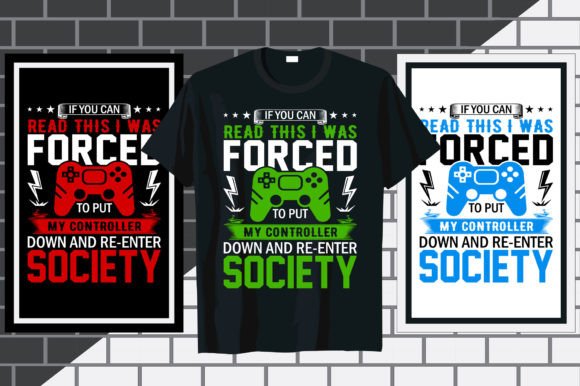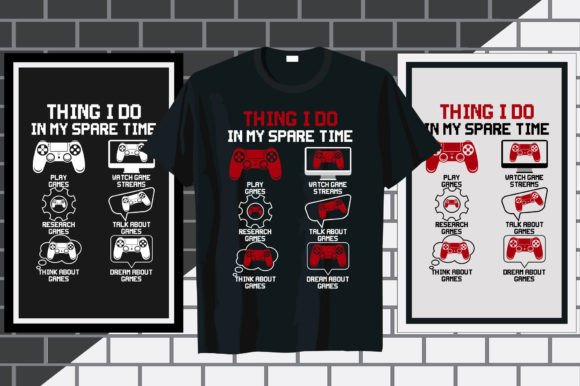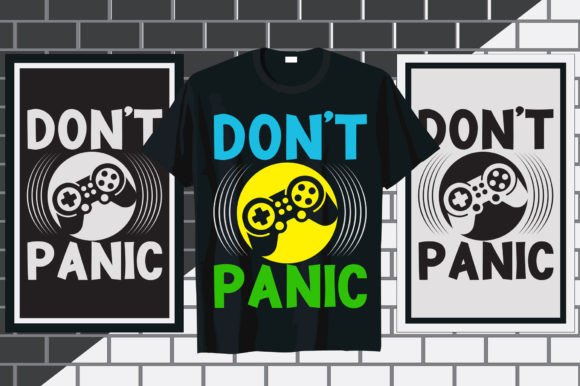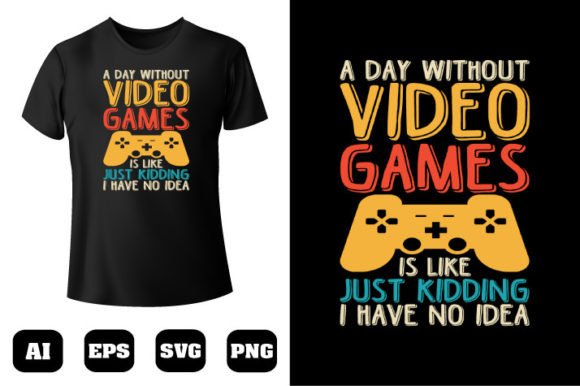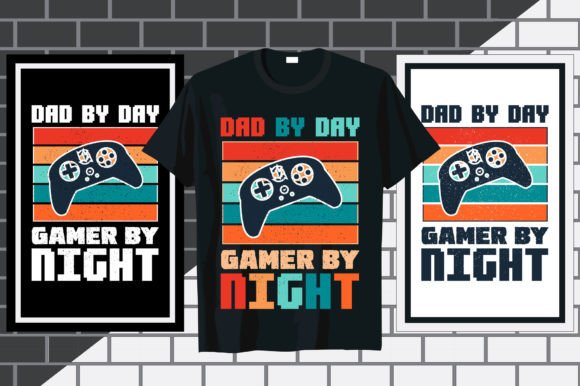
The Digital Designer's Toolkit: Understanding Typography Art Files for Print-On-Demand
In the vibrant world of custom merchandise, a simple phrase like "Dad by Day Gaming" can become a powerful statement of identity, printed on a t-shirt, mug, or hoodie. This transformation from a cool idea to a tangible product hinges on a specific type of digital asset: the typography design file. If you've ever browsed an online store offering designs for Gaming Typography T-Shirts and Mugs, you've encountered the backbone of the modern creative economy. These are not just images; they are versatile, high-quality digital files ready for the print-on-demand industry. Understanding what they are, what they contain, and how they are used unlocks a world of possibility for creators, entrepreneurs, and anyone looking to personalize items with professional quality.
What Are Typography Design Digital Files?
At their core, typography design files are digital blueprints for artwork. They focus primarily on stylized text and lettering—like the popular "Dad by Day Gaming" concept—crafted to be visually striking. Unlike a standard photograph, these designs are typically created as vector graphics or high-resolution raster images. The key offer from a digital store is not a physical product, but the license to use the design file itself. Customers receive a bundle of file formats, each serving a different technical purpose in the production process. This approach empowers the buyer to become the producer, applying the design to a vast array of products.
The Essential File Formats: EPS, PNG, JPEG
When you purchase a design, you'll commonly receive a ZIP file containing multiple formats. Each has a distinct role:
- EPS (Encapsulated PostScript): This is often the most valuable file. It's a vector format, meaning the design is built from mathematical points and paths, not pixels. This allows it to be scaled to any size—from a small sticker to a large blanket—without losing quality or clarity. It is "ready to print" for professional machinery and is fully "color changeable," letting you easily alter the text or background colors to match your product.
- PNG 4500×5400 at 300 dpi: This is a high-resolution raster (pixel-based) image with a transparent background. The dimensions and 300 dots-per-inch (dpi) resolution ensure crisp, detailed prints even at large sizes. The transparency is crucial; it allows the design to be placed on any colored fabric or material without a white border box around it.
- JPEG: A versatile, compressed image format suitable for many basic applications, digital previews, or certain printing systems.
Receiving all three ensures you have the right tool for every job, whether it's for a professional cutting machine (using the EPS) or a home iron-on transfer (using the PNG).
The Practical Relevance: From Digital File to Physical Product
The magic of these files is their application in the print-on-demand (POD) ecosystem. This business model allows individuals to sell custom merchandise without handling inventory, shipping, or manufacturing. You simply upload your design file to a POD platform, and they handle the production whenever a customer orders. The typography design file is the crucial ingredient.
As advertised, these files are engineered for a staggering variety of products:
- Apparel: T-Shirts, Sweaters, Hoodies, and Jumpers.
- Home & Lifestyle: Mugs, Pillows, and Stickers.
- Crafting: Vinyl decals for walls or cars, scrapbooking elements, and card invitations.
The same "Gaming Typography" design can seamlessly adorn a cozy hoodie, a ceramic coffee mug, and a laptop sticker, maintaining perfect quality across all items. This versatility is directly enabled by the scalable, high-resolution files provided.
Common Uses and Creative Applications
The provided list of uses—from scrapbooking to engraving—is not just a suggestion; it's a map of modern creativity. Here's how these files fit into daily activities and small business:
- Personal Gifting: Creating a unique mug or t-shirt for a friend who is a "Dad by Day, Gamer by Night" becomes a simple task. You buy the design, use a home iron-on or a local print shop, and craft a personalized gift.
- Small Business & E-commerce: Entrepreneurs can launch entire stores centered on niche phrases. By purchasing ready-made, professional designs, they save countless hours of design work and can focus on marketing and sales, using the EPS and PNG files as their product catalog on POD sites.
- Crafting Communities: For hobbyists with cutting machines (like Cricut or Silhouette), the EPS and PNG files are perfect for creating vinyl stickers, custom t-shirts, or decorated cards. The "100 Color Changeable" feature in the vector file lets them match the design to their specific project palette.
Clarifying Misunderstandings: What You're Really Buying
A common assumption is that purchasing a "T-Shirt Design" means buying a physical t-shirt. It's vital to understand that you are purchasing a digital asset—the graphic file itself. Another point of confusion is licensing. Most stores selling these files grant a commercial license, allowing you to use the design to create and sell physical products. However, it's always wise to check the specific terms. You are usually not buying exclusive ownership of the phrase or design; others may also purchase and use the same file. Your uniqueness comes from how you apply it—on what product, in what color variant, and to what market.
The promise of "Happiness Guaranteed" and "High quality Products" refers to the quality of the digital file and the resulting print, not a physical item shipped by the design store. The "product" that comes "in a variety of colors" refers to the design's adaptability to be printed on products of various colors, thanks to the transparent PNG and editable EPS.
Building a Broader Understanding: The Significance in Modern Creativity
This model represents a democratization of design and manufacturing. It allows anyone with a niche idea—whether it's for a special day occasion, a hobby community, or a personal statement—to access professional-grade graphic resources without needing advanced software skills. The designer (the store owner) creates the scalable, versatile artwork. The customer (you) brings it to life on the medium that fits their vision. This synergy powers a massive segment of e-commerce and personal expression.
Technology enables this through standardized file formats (EPS, PNG) and integrated POD platforms. In work and business, it lowers the barrier to entry for retail. In education and daily life, it empowers individuals to create custom items for events, teams, or family gifts. The typography design file is a tiny but powerful engine in the vast landscape of modern, customized consumer goods.
Getting Started with Your Design Files
Once you download the ZIP file, use a program like WinZIP or WinRAR to extract the EPS, PNG, and JPEG files. Your next steps depend on your goal:
- For Print-On-Demand Sales: Upload the high-resolution PNG (with transparency) or the EPS to your chosen POD service like Teespring, Redbubble, or Amazon Merch.
- For Home Crafting: Import the EPS or PNG into your cutting machine software to create vinyl decals or iron-on transfers.
- For Local Printing: Send the 300 dpi PNG file to a local t-shirt print shop for a one-off order.
By understanding the purpose and power of these T-Shirt Vector and Graphic T-Shirt files, you move from being just a consumer to being an active creator, capable of bringing a clever typography design like "Dad by Day Gaming" into the tangible world, exactly how you imagine it.