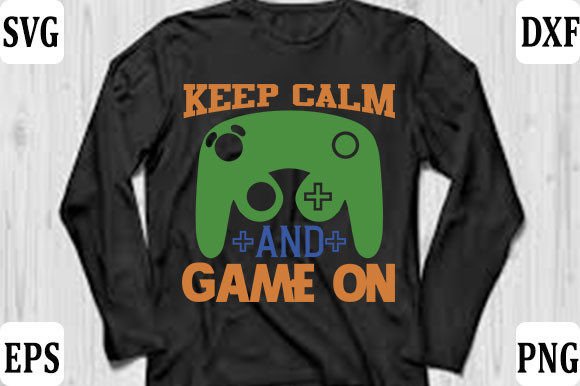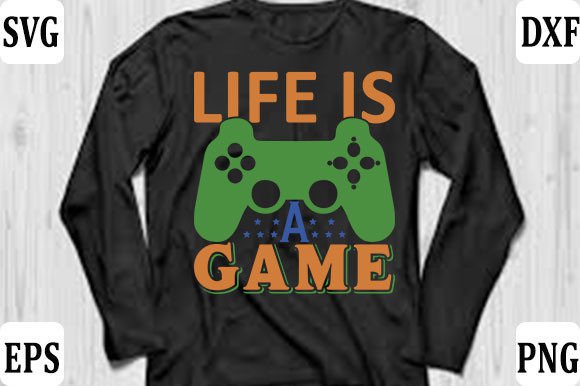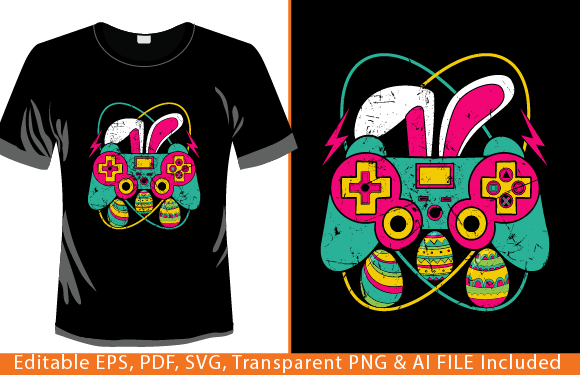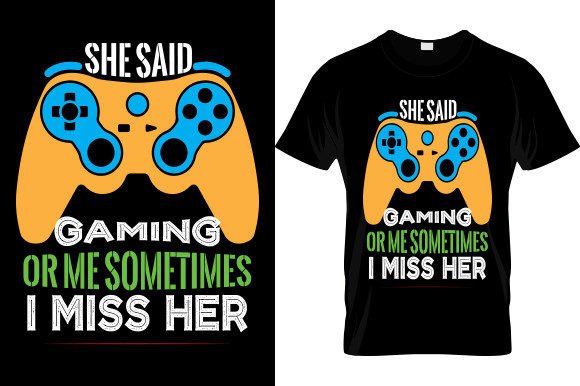
Gaming Gamer T-shirt Design, Time to Play the Game: A Practical Asset for Apparel Projects
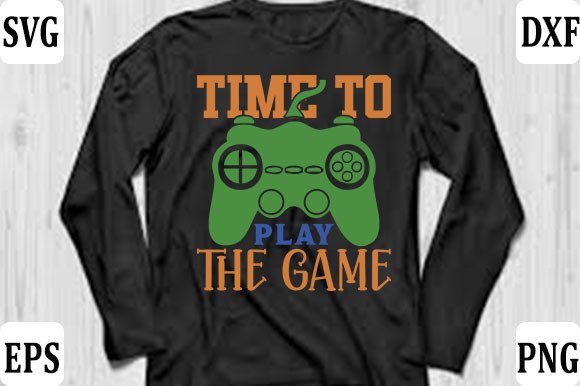
When you come across a design bundle labeled Gaming Gamer T-shirt Design, Time to and its companion variant Gaming Gamer T-shirt Design, Time to play the game, you are looking at a ready-made visual concept tailored for gaming culture merchandise. The ZIP file containing EPS, SVG, PNG, and DXF formats signals that this is not just a static image but a multi-format resource prepared for different production environments. Understanding what this asset offers and how it fits into an actual design-to-product workflow can save you hours of rework, file conversion headaches, and compatibility surprises.
What These Files Actually Provide
At its core, this design set is a typographic and thematic statement aimed at gamers. The phrase Time to play the game works as a call to action, a lifestyle marker, or a motivational tagline depending on the audience. The file bundle is structured to bridge the gap between a creative concept and physical output. Here is how each format plays a role:
- EPS (Encapsulated PostScript): A vector format that preserves layers, editable text elements, and scalable paths. It is the master file for professional editing in Adobe Illustrator, CorelDRAW, or Affinity Designer. If you need to recolor, resize, or modify the design without losing quality, this is where you start.
- SVG (Scalable Vector Graphics): A lightweight vector format compatible with cutting machine software like Cricut Design Space, Silhouette Studio, and web-based design tools. It retains clean paths suitable for vinyl cutting, print-then-cut workflows, and screen use.
- PNG (Portable Network Graphics): A raster version with a transparent background. This is the file you drop into mockup templates, online print-on-demand platforms, or social media previews. It is ready to use without any vector editing knowledge.
- DXF (Drawing Exchange Format): Originally developed for CAD applications, this format has become a staple in the cutting machine community. It ensures compatibility with older software and specific laser engraving or CNC setups that prefer DXF over SVG.
Having all four in one ZIP means you do not need to perform manual conversions or guess which format your production partner requires. That alone reduces friction when moving from idea to finished product.
Where This Design Fits in a Broader Creative Process
The Gaming Gamer T-shirt Design, Time to asset is not the starting point of a project, nor is it the final deliverable. It sits in the middle of a sequence that looks something like this: you identify a niche or audience interest, you source or create visual concepts that speak to that audience, you prepare the design for a specific blank product, and then you produce, market, and fulfill orders. This design works as a plug-and-play creative element that shortens the conceptual phase. Instead of sketching a gaming slogan from scratch, you begin with a polished typographic layout and then adapt it.
For apparel decorators and small business owners, this type of asset reduces the time between inspiration and listing. If you run a print-on-demand store, you can take the PNG, overlay it onto a T-shirt mockup, and have a product listing ready in under an hour. If you handle production in-house with heat transfer vinyl, the SVG or DXF goes directly into your cutting software, and you proceed to weeding and pressing. The design is not the product; it is the catalyst that makes the product possible with minimal friction.
Before the Project: Planning and Preparation
Before committing to production, you need to evaluate how a design will perform on different garment colors, fabric types, and print methods. The Gaming Gamer T-shirt Design, Time to play the game artwork typically uses bold, high-contrast lettering that works well on dark and light backgrounds alike. However, preparation still matters. Open the EPS file and check for compound paths, stray anchor points, or text outlines. If the text is already converted to outlines, you lose the ability to change the font easily, but you gain consistency across machines that do not have the original typeface installed. Decide early whether you need the editable text or if outlined shapes serve your purpose better.
Also, assess the color palette. A design that looks crisp in black and white may need adjustments for a heathered tri-blend shirt where ink opacity behaves differently. Use the vector files to create color separations if screen printing, or to assign cut paths if layering vinyl. The preparation stage is also where you decide on sizing. The scalable nature of EPS and SVG means you can create a left-chest version, a full-front print, and a back-placement variation from the same source file without quality loss.
During the Project: Execution and Compatibility
Once preparation is complete, the actual execution will vary depending on your chosen method. For direct-to-garment printing, a high-resolution PNG at 300 DPI placed correctly in your print software is often sufficient. For sublimation, you might convert the design to a different color profile and mirror it before pressing. For vinyl cutting, the SVG or DXF needs to be imported, scaled to the target dimensions, and then sent to the cutter. The presence of multiple vector formats reduces the chance of software rejection. Some users find that Silhouette Studio handles DXF more reliably than SVG depending on the software version, while Cricut Design Space generally accepts both but may require node cleanup on imported SVGs.
A practical observation: always run a test cut or test print before committing to a full production run. The digital design may look flawless on screen, but the physical output reveals things like overly thin strokes that tear during weeding, or colors that shift under heat. Use one blank garment or a scrap piece of vinyl to verify. This small step protects your materials and your reputation.
After the Project: Quality Control and Iteration
After pressing or printing, inspect the result under good lighting. Check for adhesion, alignment, and color accuracy. If the design is intended for sale, photograph it on a real garment rather than relying solely on digital mockups. The PNG from the bundle can still serve as a clean overlay for promotional graphics, but an actual product photo adds credibility for buyers. Keep the original ZIP and project files organized. You may return to the same Gaming Gamer T-shirt Design, Time to asset months later for a seasonal promotion, a different product category like hoodies or tote bags, or a revised colorway. Organized file storage with clear naming conventions prevents you from having to repurchase or re-download.
Print-on-Demand Sellers
If you operate through platforms like Printful, Printify, Redbubble, or Merch by Amazon, your workflow centers on uploading a high-quality PNG and positioning it within the platform's design tool. The Gaming Gamer T-shirt Design, Time to play the game PNG file is pre-isolated on a transparent background, so you avoid the hassle of manual background removal. Before uploading, confirm that the dimensions match the print area specifications of your chosen product. Some platforms require specific pixel dimensions for optimal DPI. Resizing inside the EPS editor before exporting a final PNG gives you more control than resizing inside a web-based tool that might recompress the image.
Heat Transfer Vinyl and Crafting
For small-batch makers and hobbyists, the SVG and DXF files are the primary workhorses. Import the vector into your cutting software, size it to fit the garment or accessory, and mirror it if required. The phrase Time to play the game works particularly well on gaming-themed apparel for esports events, streaming communities, or personal gifts. Pay attention to the complexity of the lettering. Small, intricate cuts increase weeding time and the risk of tearing. If you anticipate scaling the design down for smaller items like caps or koozies, test the cut at that reduced size first.
Screen Printing and Bulk Production
Screen printers will likely work from the EPS file. Open it in a vector editor to separate colors if the design contains multiple hues. The clean vector paths allow for precise screen creation. If the design is single-color, the process is straightforward. If it contains gradients or halftones, you may need to add those effects during prepress. The EPS format supports spot color assignments, which align well with Pantone matching systems commonly used in screen printing.
Factors That Influence the Final Outcome
Several variables affect how a design translates from digital asset to physical product. Fabric composition matters: 100% cotton accepts certain inks differently than polyester blends. The color of the blank garment interacts with the design's transparency and any ink underbases. The resolution of the PNG file at the intended print size is critical; vector formats help here because you can export at any resolution without degradation. Heat press temperature, pressure, and dwell time influence the durability of vinyl or transfer application. Each of these factors exists outside the digital file itself but must be accounted for in your process.
Consistency across multiple units is another quality control concern. If you produce twenty shirts for a local gaming tournament, each one should match the others in placement, color, and finish. Using the same source file, cutting or printing settings, and pressing parameters helps maintain uniformity. The design asset is the fixed variable; your production discipline is what ensures repeatable results.
Long-Term Use and Asset Organization
A design like Gaming Gamer T-shirt Design, Time to has longevity. Gaming culture is not a passing trend, and phrases that tap into player identity tend to remain relevant across console generations and platform shifts. Because you receive editable vector formats, you can refresh the design over time. Change the typography treatment, add a distressed texture, incorporate a controller icon, or adjust the wording for specific sub-communities such as PC builders, retro collectors, or tabletop gamers. The EPS file serves as a foundation for iterations rather than a one-time-use graphic.
Organize your files in a way that makes retrieval and reuse intuitive. A folder structure like Designs > Gaming > Slogans > Time to Play the Game > [EPS, SVG, PNG, DXF] keeps things accessible. Back up the ZIP file in cloud storage or an external drive. If you collaborate with other designers or production partners, share only the format they need to reduce confusion. Version control matters too. If you create an updated version of the design, save it as a separate file with a clear naming convention that includes the date or version number.
Making the Design Your Own
While the artwork arrives as a complete concept, customization is where you differentiate your product. Adjust the colors to match a specific gaming brand's palette within fair use boundaries. Combine the slogan with original illustrations or gamer tags. Use the design on unexpected products like mousepads, phone cases, or streaming backdrops. The file formats provided support this flexibility because vectors scale infinitely and the transparent PNG layers cleanly over any background. The creative decisions you make around the asset, not the asset itself, define your output.
Consider the emotional connection your audience has with gaming. The phrase Time to play the game can signal relaxation, competition, or community. Your product copy, product photography, and marketing should align with that emotional angle. The design is the visual anchor; the experience you build around it is what moves units.
Common Pitfalls and How to Avoid Them
One frequent mistake is assuming all file formats are production-ready without inspection. Open each file and verify that the content is intact and correctly scaled. Another issue arises when users attempt to edit a complex EPS in software that does not fully support PostScript, resulting in missing elements or distorted text. Stick to industry-standard vector editors for modifications. Additionally, watch for licensing restrictions. Some design bundles allow commercial use without attribution, while others impose limits on print-on-demand platforms or print run quantities. Review the license that accompanies your purchase to ensure compliant usage.
Finally, do not overlook typography legibility. What reads well on a large monitor may not translate to a left-chest print or a hat patch. Test at actual size before committing to production. If the lettering feels cramped or the stroke weight is too thin, adjust it in the vector file and save a revised version.
The Gaming Gamer T-shirt Design, Time to play the game asset bundle provides a practical, multi-format resource that fits cleanly into apparel production, crafting, and digital merchandise workflows. Its value lies not only in the design itself but in the file diversity that removes technical barriers. By approaching the asset with a clear preparation, execution, and quality control mindset, you can turn a single ZIP file into a consistent, sellable product line that resonates with gaming audiences across platforms.