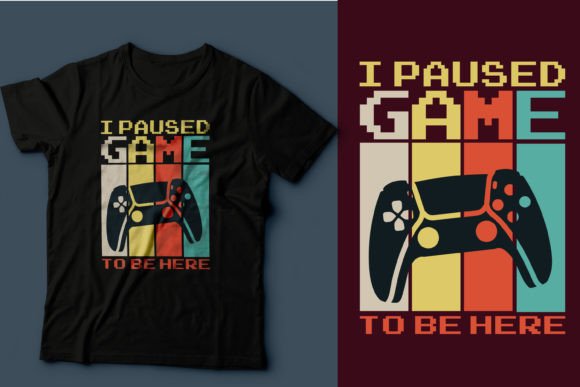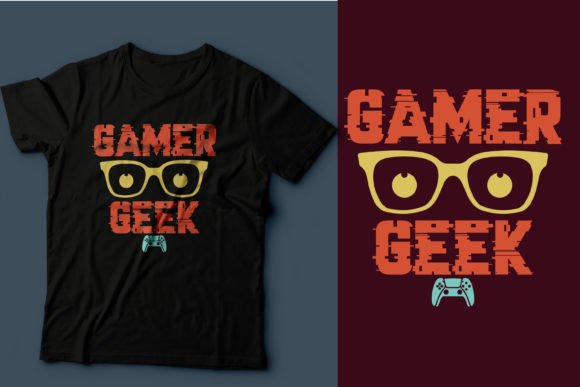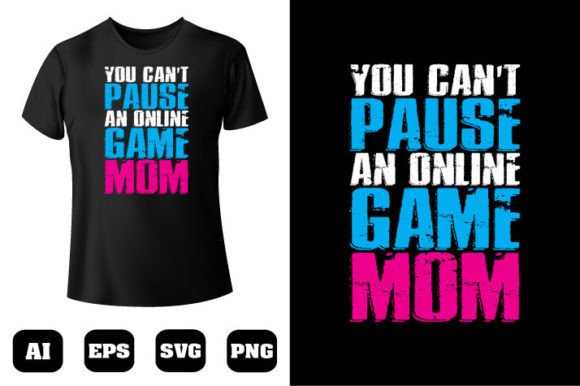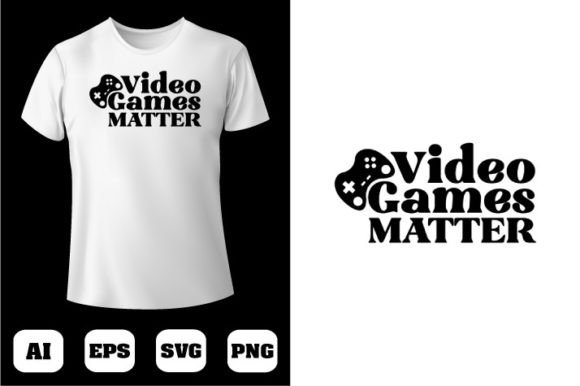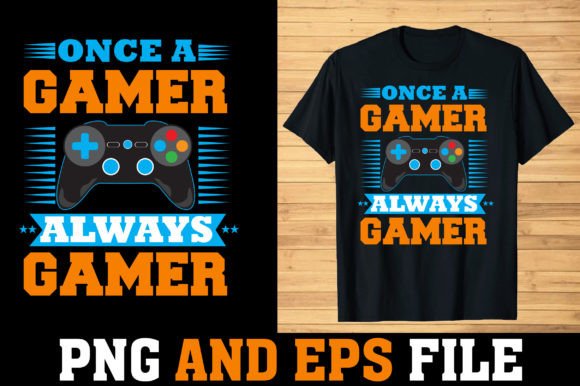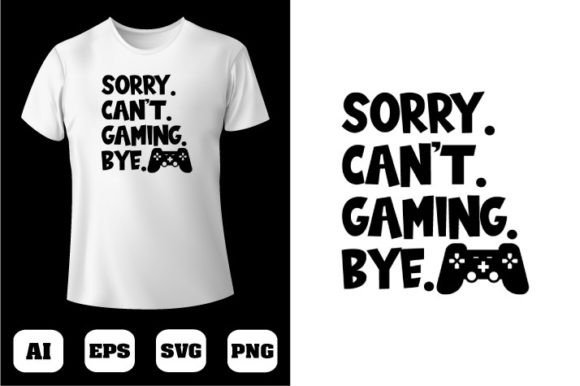
The Rise of Gaming T-shirt Design 111 and What It Says About the Future of Apparel Creation
The gaming apparel market has transformed dramatically over the last decade. What once consisted of basic logo tees and limited-edition convention merchandise has evolved into a sophisticated ecosystem where design quality, customization flexibility, and production readiness determine success. Within this landscape, Gaming T-shirt Design 111 has emerged as a noteworthy asset for creators who need to move from concept to finished product without friction. But understanding its relevance requires looking beyond the file itself and examining the forces reshaping how gaming merchandise is conceived, produced, and brought to market.
Why Gaming T-shirt Design Assets Matter More Than Ever
The print-on-demand industry has fundamentally altered the economics of apparel. Platforms like Printful, Teespring, and Redbubble have lowered barriers to entry so dramatically that anyone with design skills can launch a clothing line. Yet this democratization has created a new challenge: the market is flooded with mediocre designs. Standing out requires assets that are not just visually compelling but technically superior. Gaming T-shirt Design 111 represents a category of design resources that address this exact tension—delivering professional-grade artwork that arrives ready for commercial use without requiring extensive rework.
For entrepreneurs running niche gaming merchandise stores, time is the scarcest resource. Every hour spent adjusting color profiles, fixing resolution issues, or rebuilding vector paths is an hour not spent on marketing, customer engagement, or developing the next product. Design assets that arrive genuinely ready to print eliminate a significant bottleneck in the creative workflow. When a file opens in Adobe Illustrator CC with properly organized layers, cleanly constructed vector shapes, and appropriate color spaces already configured, the path from download to production shrinks dramatically.
The Technical Foundation That Separates Professional Assets from Amateur Files
Anyone who has purchased design assets online knows the frustration of discovering that a promising file falls apart upon inspection. Pixelated edges appear when scaling. Colors shift unexpectedly during export. Fonts are missing or outlined incorrectly. These problems stem from a fundamental misunderstanding of what production-ready design requires. Gaming T-shirt Design 111 is built on specifications that prevent these issues: 300 dpi resolution ensures crisp output across all printing methods, while 100 vector shapes that remain fully resizable mean the artwork performs equally well on a chest print, a sleeve accent, or an oversized back graphic.
The inclusion of multiple file formats—AI, EPS, PNG, and SVG—reflects an understanding of how diverse modern production pipelines have become. A screen printer might need the editable AI file to make separations. A direct-to-garment operator might prefer the high-resolution PNG. A web developer building a mockup generator might require the SVG. By packaging all of these together, the design accommodates different technical requirements without forcing the buyer to convert formats—a process that often introduces errors.
How Customizable Assets Are Reshaping Creative Workflows
The phrase "100 Color Changeable" might read like a bullet point, but it describes a capability that matters enormously in practice. Gaming communities are deeply tied to specific color identities—the neon green of one esports team, the crimson and gold of another, the signature palette of a beloved franchise. A static design locked into predetermined colors limits its market. An asset built with editable color systems allows a single design to serve multiple audiences, each with their own visual language.
This flexibility extends beyond simple hue replacement. Designers working with Gaming T-shirt Design assets that feature properly constructed vector elements can isolate individual components, adjust gradients, modify opacity, and create variations that feel distinct rather than recolored. A design might be offered in a dark, aggressive palette for one segment of the gaming community and reimagined with pastel tones for another—all from the same source file. This adaptability multiplies the commercial potential of a single design investment.
The Intersection of Gaming Culture and Wearable Identity
Gaming has transcended its origins as a niche hobby to become a dominant cultural force. Esports tournaments fill arenas. Streaming personalities command audiences larger than traditional celebrities. Gaming aesthetics influence fashion, music, and visual art. In this environment, what people wear signals belonging, taste, and identity. A well-designed gaming t-shirt is not merely merchandise; it is a statement of affiliation and personal expression.
This cultural shift raises expectations for design quality. Consumers who have grown up surrounded by high-production-value games, cinematic trailers, and polished brand identities are visually literate in ways previous generations were not. They notice when typography feels awkward, when compositions lack balance, when artwork looks like it was assembled from clip art. Gaming T-shirt Design 111 speaks to this elevated standard by offering artwork that holds up to scrutiny—designs that could plausibly appear in official merchandise lines rather than feeling like amateur attempts.
Practical Applications Across Different Business Models
Consider a freelance designer who manages merchandise for multiple gaming content creators. Each client needs designs that reflect their unique brand while appealing to their specific audience. One streamer might want bold, aggressive imagery suited to competitive first-person shooters. Another might need something more playful and character-driven for a family-friendly channel. With assets that are easy to edit and built on fully vector shapes, the designer can adapt core artwork across these different contexts efficiently, maintaining quality while meeting varied briefs.
Or consider the independent print shop owner who serves local gaming tournaments and events. These customers often need designs turned around quickly—sometimes within days of an event announcement. Having a library of production-ready assets that can be customized with event-specific text, dates, or team names provides a competitive advantage. The shop can respond to inquiries with confidence, knowing the foundational artwork is technically sound and only needs surface-level modifications before going to press.
Why Production-Ready Design Assets Reduce Business Risk
Every print run carries financial exposure. Misprints waste materials, consume labor, and erode margins. Designs that are not properly prepared for production increase the likelihood of these costly errors. Color shifts between screen and substrate. Detail that disappears when printed at smaller sizes. Registration issues that become visible when vector elements are not properly aligned. By starting with assets that have been built to 300 dpi specifications and tested across output scenarios, creators reduce the variables that lead to production failures.
This risk reduction matters particularly for small businesses and independent creators who operate on thin margins. A ruined batch of 50 shirts might represent a significant percentage of a monthly budget. The assurance that comes from working with properly constructed design files—where paths are closed, colors are consistent, and scaling behaves predictably—translates directly into business confidence.
The Broader Movement Toward Accessible Professional Design Tools
Gaming T-shirt Design 111 exists within a larger trend: the professionalization of accessible design resources. A decade ago, the gap between premium custom design work and off-the-shelf assets was wide and obvious. Today, that gap has narrowed considerably. Advances in design software, the proliferation of skilled creators selling through marketplaces, and growing expectations from buyers have all contributed to a landscape where purchased assets can genuinely compete with commissioned work in many applications.
This does not diminish the value of custom illustration or bespoke branding. There will always be cases where original, exclusive artwork is the right investment. But for the vast middle ground of merchandise needs—event tees, community giveaways, limited drops, niche audience products—high-quality ready-made designs offer a practical path to market that balances quality, speed, and cost.
Understanding the Files: What Each Format Delivers
The presence of AI, EPS, PNG, and SVG files in a single package reflects the reality that different stages of the design-to-production pipeline demand different formats. The AI file—native to Adobe Illustrator CC—preserves full editability. Every anchor point remains adjustable. Every layer remains accessible. This is where deep customization happens. The EPS serves as a universal vector exchange format, compatible with CorelDRAW, Affinity Designer, and other applications beyond the Adobe ecosystem. The PNG delivers a raster version at production resolution, ready for quick placement in mockups or for printers that prefer flattened files. The SVG offers web-optimized vector data suitable for online store previews and responsive digital displays.
Having all four means never being caught without the right format for the task at hand. It eliminates the need to request alternate files, wait for responses, or attempt risky conversions that might compromise quality.
Building a Sustainable Creative Practice Around Gaming Apparel
For designers who want to build a business around gaming merchandise, the economics favor efficiency. The most successful operators in this space are not necessarily the most technically skilled illustrators; they are the ones who understand their audience, move quickly to capitalize on trends, and consistently deliver products that meet quality expectations. Assets like Gaming T-shirt Design 111 support this operational model by providing a reliable foundation upon which to build.
Smart creators develop systems around their assets. They maintain organized libraries. They document successful color combinations. They build templates that accelerate the customization process. Over time, this systematic approach compounds—what once took hours of painstaking manual adjustment becomes a streamlined workflow that produces consistent results. The design asset is not the final product; it is the raw material for a creative operation that scales.
Looking Forward Without Speculation
The trends driving demand for professional gaming t-shirt designs show no signs of reversing. Gaming continues to grow as a cultural force. Print-on-demand infrastructure becomes more sophisticated each year. Consumer expectations for quality keep rising. In this environment, the creators and businesses that thrive will be those who invest in robust design foundations—assets that are technically excellent, genuinely editable, and built with real-world production in mind.
Gaming T-shirt Design 111 is one expression of this principle, but the principle itself is what matters. Whether sourcing designs from marketplaces, commissioning original work, or developing in-house capabilities, the emphasis should remain on production readiness, format flexibility, and design integrity. These are the qualities that separate thriving merchandise operations from those that struggle with inconsistency, delays, and disappointed customers.
As the gaming apparel market matures, the distinction between professional and amateur output will become increasingly apparent to consumers. The brands and creators who recognize this shift and invest accordingly—in better assets, better workflows, and better production practices—will be positioned to capture loyalty and revenue in an increasingly competitive space. The tools are available. The audience is waiting. What remains is the work of bringing them together with skill, taste, and attention to the details that make the difference.